Best Foods for Glowing Skin (And the Ones to Avoid)
In this guide
You can spend hundreds of dollars on the best serums, moisturizers, and treatments and you absolutely should take care of your skin from the outside. But if your diet is working against you, your bathroom shelf can only do so much.
Here’s a truth that dermatologists and nutritionists have been saying for years: your skin is a reflection of what’s happening inside your body.
Chronic inflammation, blood sugar spikes, nutrient deficiencies, and oxidative stress all show up on your face as dullness, breakouts, premature lines, and uneven tone long before they show up anywhere else.
The good news? The same is true in reverse. Feed your body the right things consistently, and your skin starts to glow in a way that no highlighter can replicate.
This guide breaks down exactly which foods to eat more of, which ones to cut back on, and the science behind why it all matters.
Why Food Affects Your Skin So Deeply
Your skin is your largest organ, and like every other organ, it’s built entirely from what you eat. Collagen the protein that gives skin its firmness and elasticity requires specific nutrients to form and maintain.
Your skin barrier, which keeps moisture in and irritants out, is made of fatty acids that come directly from your diet. The antioxidants that protect your skin from UV damage and pollution? Food.
Dermatologist Dr. Noah Gratch explains it clearly: “Vitamins A, C, and E are big ones to incorporate into your diet. Vitamin A supports skin cell turnover, which helps maintain smooth, even skin. Vitamin C supports collagen production and helps fight free radicals that could damage the skin. Vitamin E also works to protect the skin from environmental stressors.”
According to dermatology research, diets high in refined sugars, dairy, and processed foods can lead to hormonal imbalances that trigger acne flare-ups, accelerate the breakdown of collagen and elastin, and cause skin to look tired, aged, and prone to irritation.
Understanding these mechanisms isn’t just interesting it’s actionable. Once you know why food affects your skin the way it does, making better choices becomes a lot easier.
Let’s start with the good stuff.
🌟 The Best Foods for Glowing Skin
1. Fatty Fish — Salmon, Mackerel, Sardines
If there’s one food that comes closest to a consensus “best skin food” among nutrition researchers, it’s fatty fish and salmon in particular. The science is clear: salmon offers multiple, well-documented benefits for skin health. Omega-3 fatty acids hydrate and protect. Astaxanthin fights aging. Protein builds collagen, and selenium and B vitamins provide additional support.
EPA and DHA — the omega-3 fatty acids found in fatty fish have well-known anti-inflammatory properties, which are beneficial for sensitive skin prone to redness, irritation, or conditions such as eczema and psoriasis. Omega-3s also play a key role in the production of collagen, the protein essential for maintaining skin structure and elasticity.
Two to three servings of fatty fish per week aligns with the American Heart Association’s general intake recommendation and is enough to meaningfully support skin health.
Skin benefits: Reduces inflammation, strengthens the skin barrier, supports collagen production, keeps skin deeply hydrated from within.
💡 How to eat it: Bake, poach, or pan-sear rather than frying. High-heat grilling can form advanced glycation end-products (AGEs) compounds that actually damage collagen so gentler cooking methods preserve the most nutritional value.
2. Berries — Blueberries, Strawberries, Raspberries
Berries are among the most antioxidant-dense foods on the planet, and antioxidants are your skin’s primary defense against the environmental damage that causes premature aging.
Dermatologist Dr. Carolyn Jacobs recommends eating blueberries, blackberries, strawberries, raspberries, and cranberries to promote healthy skin. “Berries are filled with antioxidants that help reduce oxidation, which can cause aging of the skin.”
Strawberries in particular are loaded with vitamin C — one medium-sized strawberry contains more vitamin C per calorie than an orange. Your body cannot produce collagen without vitamin C. It is the essential spark for the whole process without adequate vitamin C, collagen fibers are weaker and more prone to breakdown.
Skin benefits: Fights free radical damage, brightens skin tone, boosts collagen synthesis, reduces inflammation.
💡 Easy tip: A handful of mixed berries on your morning oatmeal or yogurt is one of the simplest, most effective skin investments you can make every single day.
3. Avocados
Avocados are one of the most complete skin foods available they contain healthy monounsaturated fats, vitamin E, vitamin C, and biotin, all in one delicious package.
The healthy fats in avocados are particularly valuable because they make up part of the cell membrane in every skin cell in your body. When your diet is rich in these fats, skin cells are better able to retain moisture, stay supple, and maintain that dewy, healthy appearance. When you’re deficient in them, skin becomes dry, dull, and prone to irritation no matter how much moisturizer you apply.
Vitamin E in avocados also works synergistically with vitamin C: together, they form a more powerful antioxidant duo than either does alone, protecting your skin’s collagen from oxidative damage throughout the day.
Skin benefits: Deep hydration at the cellular level, antioxidant protection, reduces inflammation, supports a strong skin barrier.
💡 On the Amazon shelf: Avocado Oil is also worth having in your kitchen it’s one of the best cooking oils for skin health and has a high smoke point for everyday use.
4. Leafy Greens — Spinach, Kale, Swiss Chard
Green leafy vegetables are among the most well-supported dietary choices for skin clarity, and skin clarity is largely a function of three things: sebum regulation, inflammation levels, and the speed at which dead skin cells are shed. Nutrients from food influence all three.
Spinach and kale are packed with beta-carotene (which your body converts into vitamin A for skin cell turnover), vitamin C for collagen, vitamin K for reducing dark circles, iron for healthy circulation that gives skin its natural color, and lutein — an antioxidant that protects skin cells from UV damage.
Skin benefits: Supports cell turnover, brightens dull skin, protects against UV damage, reduces puffiness and dark circles.
💡 A spinach salad with a squeeze of lemon is not just tasty it’s a studied nutritional pairing. The vitamin C in lemon juice significantly improves iron absorption from plant sources. It also boosts the collagen-building potential of your meal.
5. Sweet Potatoes
Sweet potatoes are one of the richest food sources of beta-carotene available a single medium sweet potato contains more than your entire daily recommended intake.
Beta-carotene is a precursor to vitamin A, which your skin uses for cell turnover (the process that keeps skin fresh, smooth, and clear by cycling out old, dead cells). When skin cell turnover slows which happens with age and poor nutrition you get dullness, rough texture, and clogged pores.
Beta-carotene also acts as a natural photoprotective compound, accumulating in the skin and offering a mild shield against UV damage over time. It’s not a replacement for sunscreen, but it’s meaningful backup protection from the inside out.
Skin benefits: Accelerates cell turnover, evens skin tone, gives skin a natural warmth and glow, mild UV protection.
6. Walnuts and Pumpkin Seeds
Nuts and seeds are among the most overlooked skin foods, and they deserve far more attention.
Walnuts are one of the only plant-based sources of omega-3 fatty acids that meaningfully supports skin barrier function making them an excellent option for those who don’t eat fish. They’re also rich in zinc, a mineral that plays a critical role in regulating oil production, healing acne and wounds, and reducing inflammation.
Zinc, found in pumpkin seeds, beef, and chickpeas, is particularly valuable for managing sebum regulation it counteracts androgen receptor activity that stimulates sebaceous gland activity, making it one of the most effective dietary tools for managing oily skin and breakouts.
Skin benefits: Reduces oiliness and breakouts, supports the skin barrier, promotes wound healing, fights inflammation.
💡 Easy snack: A small handful of walnuts + pumpkin seeds = one of the best skin-supporting snacks you can eat between meals. Pair with a few berries for a complete antioxidant boost.
7. Green Tea
Green tea deserves its own category because it’s not just good for skin it’s one of the most researched anti-aging substances in nutrition science. The key compounds are catechins, particularly EGCG (epigallocatechin gallate), which are among the most potent antioxidants found in any food or beverage.
EGCG has been shown to protect collagen from UV-induced breakdown, reduce inflammation, improve skin hydration and elasticity, and even reduce redness in people with rosacea. Drinking 2–3 cups a day delivers consistent antioxidant protection that works alongside your topical skincare routine.
Skin benefits: Reduces inflammation, protects collagen, evens skin tone, soothes redness, fights premature aging.
💡 On Amazon: Organic Matcha Green Tea Powder gives you a concentrated dose of EGCG in a single serving — mix into lattes, smoothies, or oatmeal.
8. Dark Chocolate (Yes, Really)
Before you close the tab this one is backed by science, not wishful thinking. Dark chocolate with 70%+ cacao content is rich in flavanols, a class of antioxidants that have been shown to increase blood flow to the skin, improve skin density and hydration, and reduce sensitivity to UV-induced redness.
The key is the cacao content. Milk chocolate is high in sugar and dairy (both skin troublemakers, as you’ll see below), which cancels out most of the benefits. Stick with dark chocolate 70% cacao or higher and keep it to 1–2 small squares a day.
Skin benefits: Boosts skin hydration, improves circulation for a natural flush, protects against UV damage, reduces inflammation.
💡 On Amazon: Endangered Species 88% Dark Chocolate is a widely loved option that’s both delicious and skin-friendly.
❌ Foods That Are Quietly Wrecking Your Skin

Now for the harder conversation. These aren’t foods you need to eliminate forever but understanding what they’re doing to your skin is powerful motivation to cut back.
1. Sugar — The #1 Skin Enemy
Sugar is, without question, the single most damaging food for your skin’s long-term health and appearance. And the mechanism is specific and well-documented.
Glycation is a biochemical process where sugars bind to skin proteins such as collagen and elastin, forming harmful compounds called Advanced Glycation End Products (AGEs). Over time, AGEs cause skin fibers to stiffen, lose elasticity, and become more prone to damage resulting in skin that appears dull, wrinkled, and structurally weakened.
These AGEs make collagen rigid over time, meaning it loses its flexibility and ability to bounce back the very properties that keep skin looking firm and youthful.
But glycation isn’t the only way sugar damages skin. Diets high in sugar cause spikes in insulin, leading to increased oil production and clogged pores creating the perfect conditions for acne and breakouts to become more frequent and severe.
The biggest offenders: sodas and sweetened drinks, white bread and refined carbs, candy and pastries, and anything containing high-fructose corn syrup. High-fructose corn syrup is particularly damaging because it creates AGEs faster than regular sugar and it appears in everything from soft drinks to salad dressings, making it one of the most widespread hidden skin disruptors in the modern diet.
What it does to your skin: Accelerates collagen breakdown, causes premature wrinkles and sagging, triggers breakouts, creates dullness and uneven tone.
2. Dairy — The Breakout Trigger
The dairy-acne connection is one of the most debated topics in dermatology, but the evidence has grown significantly more consistent in recent years. Dairy contains natural hormones that can disrupt your body’s delicate hormonal balance, leading to increased oil production and clogged pores.
Research shows the standard Western diet, which includes large amounts of dairy, causes inflammation and skin to age faster. Some dairy products are high in saturated fats and contain trans fats that are inflammatory and promote skin aging and dairy may be the issue if you can’t figure out why you keep having breakouts.
This doesn’t mean you need to give up dairy completely. Many people can tolerate moderate amounts without skin issues. But if you’re experiencing persistent breakouts that don’t respond to topical treatments, cutting dairy for 4–6 weeks and observing your skin is a worthwhile experiment.
What it does to your skin: Triggers hormonal breakouts, increases oil production, may worsen inflammatory skin conditions like eczema and rosacea.
3. Alcohol — The Dehydration Machine
Alcohol affects skin on multiple levels simultaneously, and none of them are good.
First, alcohol is a powerful diuretic it causes your body to lose water and electrolytes rapidly, leaving skin visibly dehydrated, dull, and puffy the morning after drinking. Second, it depletes vitamin A, one of your skin’s most critical nutrients for cell turnover and renewal. Third, it’s inflammatory regular alcohol consumption elevates inflammatory markers throughout the body, worsening conditions like rosacea, eczema, and acne.
Regular drinkers often notice enlarged pores, persistent puffiness, a loss of firmness, and an overall dull, uneven complexion all of which are direct consequences of alcohol’s effects on skin hydration and collagen.
What it does to your skin: Causes dehydration and dullness, depletes skin-critical nutrients, increases inflammation and redness, accelerates signs of aging.
4. Processed and Fried Foods
Some of the biggest dietary culprits for premature skin aging are highly processed, refined foods that disrupt blood sugar, trigger inflammation, or deprive your body of essential nutrients.
Processed meats contain high amounts of saturated fats and nitrates that lead to inflammation, according to board-certified dermatologist Dr. Yoram Harth. Fried foods are similarly problematic they’re often cooked in omega-6-rich oils that actively promote inflammation in the body, counteracting the anti-inflammatory work you might be doing elsewhere in your diet.
The irony of processed foods is that they don’t just contain harmful ingredients they’re also stripped of the vitamins, minerals, and antioxidants your skin actually needs to repair and protect itself. You get the damage without the protection.
What it does to your skin: Promotes chronic inflammation, accelerates aging, worsens acne and breakouts, depletes skin-essential nutrients.
5. High-Glycemic Refined Carbs
White bread, white rice, regular pasta, crackers, and most packaged snack foods share something in common: they’re digested very quickly and cause a rapid spike in blood sugar. Foods that cause a spike in blood sugar levels are directly associated with acne. High blood sugar boosts insulin levels and contributes to inflammation insulin leads to the hormonal changes responsible for acne, while inflammatory foods can worsen existing breakouts.
Swapping refined carbs for whole grain versions brown rice, whole grain bread, oats, quinoa delivers the same satisfaction with a much more gradual blood sugar response. Your skin (and the rest of your body) notices the difference quickly.
What it does to your skin: Triggers breakouts, increases oil production, accelerates collagen breakdown via glycation.
Your Skin-Glow Grocery List at a Glance
Here’s a quick cheat sheet for your next shopping trip:
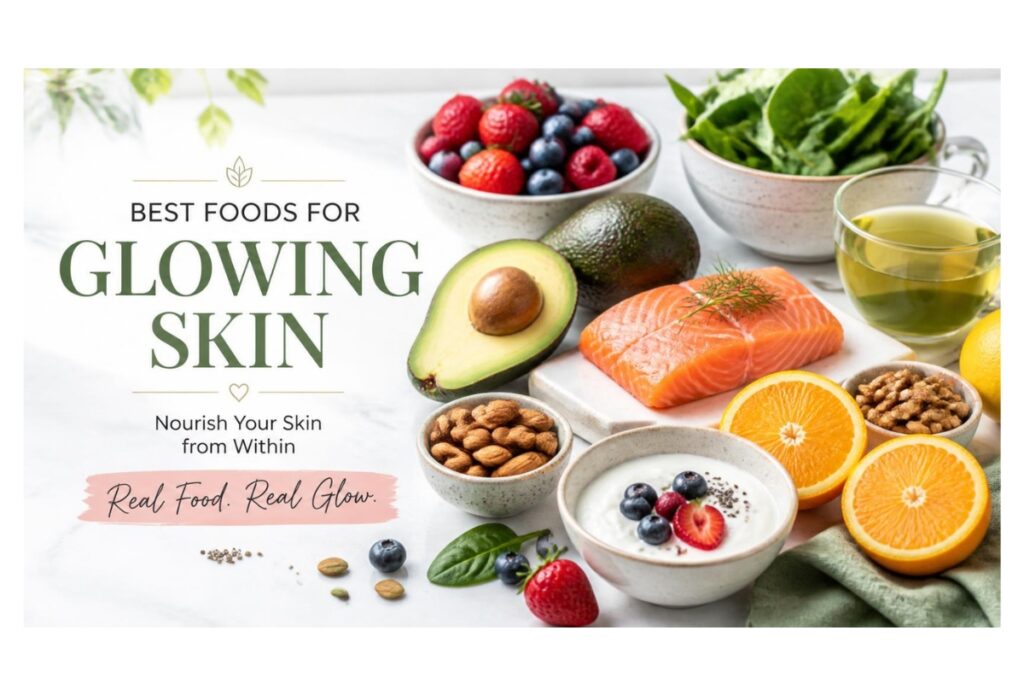
✅ Load Up On:
- Fatty fish (salmon, mackerel, sardines) — 2–3x per week
- Berries (blueberries, strawberries, raspberries) — daily
- Avocados — 3–4x per week
- Leafy greens (spinach, kale, chard) — daily
- Sweet potatoes — several times per week
- Walnuts and pumpkin seeds — daily snack
- Green tea — 2–3 cups daily
- Dark chocolate 70%+ — 1–2 squares daily
- Bell peppers — one of the richest vitamin C sources available
- Eggs — biotin, lutein, protein, and zinc in one food
❌ Cut Back On:
- Sugar and high-fructose corn syrup — the #1 collagen destroyer
- Dairy — especially if you’re prone to breakouts
- Alcohol — major dehydration and inflammation trigger
- Fried and processed foods — inflammatory and nutrient-depleting
- White bread, white rice, refined carbs — high-glycemic, breakout-triggering
One More Thing: Hydration
No conversation about diet and skin is complete without talking about water. Dehydration shows up on your face almost immediately in tightness, dullness, more visible fine lines, and a loss of that healthy plumpness that makes skin look youthful.
The standard recommendation of 8 glasses (about 2 liters) per day is a reasonable baseline, but active people, those in warm climates, and anyone consuming dehydrating substances like caffeine or alcohol need more. You can also boost hydration through food cucumber, watermelon, celery, and coconut water all contribute meaningfully to your daily fluid intake.
Research shows that achieving healthy, youthful-looking skin requires making internal improvements by consuming nutrient-dense foods, and specifically low-sugar diets that contain probiotics and nutrients like zinc, selenium, collagen precursors, and omega-3 fatty acids all of which have been linked to younger and healthier looking skin.
Drink consistently throughout the day rather than trying to catch up in the evenings, and if you find plain water hard to maintain, herbal teas, infused water, and low-sugar coconut water all count.
The Bottom Line
Beautiful skin is built in the kitchen just as much as the bathroom. The products you apply matter enormously but they work best on a body that’s nourished, hydrated, and protected from the inside.
You don’t need to overhaul everything overnight. Start with one or two changes: add a handful of berries to your breakfast, swap your afternoon soda for green tea, cook salmon twice a week instead of once. Small, consistent shifts compound into visible results faster than most people expect.
Your skincare routine brings the glow. Your diet keeps it there.
Enjoyed this post? share it with a friend who swears skincare is all about products — this one might change their mind! And if you’re ready to build the routine that goes with this diet, head over to The Perfect Morning Skincare Routine for Glowing Skin to see exactly what we recommend. 🌿
Disclosure: This post contains Amazon affiliate links. If you purchase through these links, I may earn a small commission at no extra cost to you. All recommendations are genuine and chosen for their quality and effectiveness. Thank you for supporting this blog! 💛